Wednesday, May 7, 2008
The Kitchen Sisters
Tuesday, May 6, 2008
Poetry & Pizza
Maybe I should have been paying closer attention to what was happening, but when the poet said he would be doing his “zone out pieces” he wasn't kidding. My mind was somewhere else entirely when I noticed most of the audience was walking out the door. Had I missed something? The host was still at the microphone introducing the next poet. She was standing over to the side with chapbook in hand ready to go on. The show was clearly not over. Yet, all these people were being extremely rude. Had the previous poet been bad enough to have caused this mass exodus? I couldn't bring myself to look over at him. What must it feel like to know your poetry has cleared a room? I can't imagine (and I hope I never have to find out).
Although I had not been listening to the poetry, I had been enjoying myself. The reading was called Poetry & Pizza, and, in my humble opinion, names don't get any better than that. As soon as I saw the ad I knew where I was going to be on Friday night. I figured if someone was going to go to the trouble of combining my two favorite things together, the least I could do was show up.
For some reason I imagined the reading would be at a hard-to-get-to, greasy, mom and pop pizza joint filled with finger-snapping teens doing wannabe hip-hop or “imsoanguished” diary-style poetry, but it was neither. To my surprise, it was slightly upscale. The venue was an Escape from New York pizza restaurant (nicer than all the other ones around town) in the Financial District. There was even a poem by Galway Kinnell written across one wall (“If one day it happens …”) and a jazz guitarist playing. Some of the audience members were dressed in the obligatory black and I must admit I started feeling a bit intimidated. I was afraid that I might have to actually use my brain.
The restaurant had been closed at 6 and reopened for us at 7. The admission is a five-dollar donation, which includes the reading plus all the pizza, salad, and coke you want. I later found out that all the money would be going to a charity of the Featured Poet's choice – on this night it was going to the Zen Hospice. After several servings of gourmet pizza (Potato, Pesto, and Garlic – crazy!) this reading was already an A+ in my book.
Unfortunately, the poets weren't as good as the pizza. By their own admission, they were not performers. This was evident, not so much in how they read, but in how they used the microphone. They would either hold it too close or too far away which made their voices garbled and hard to understand – never a good thing when listening to poetry.
Every reading has an off night, and, judging by the size of the crowd (the place was packed at the beginning), I am assuming this had to be one. I will certainly be going again. The fact that it is being done for charity is reason enough for me. I think it is important to support a show like that. Besides, with a reading called “Poetry & Pizza” there is always a 50/50 chance that you will like at least half of it.
*The reading on December 2nd will be an Open Mic.
Litquake 2005: Humor at the Purple Onion
What better place to host a gaggle of humorous readings than at the Purple Onion, San Francisco's landmark comedy club in North Beach? I'm talking legends have performed here: Lenny Bruce, Woody Allen, The Smothers Brothers – all at this original location. Today, the place still has that intimate feel, with low ceilings, dim lighting, cozy booths, small tables, and the periodic, comforting sound of the martini shaker coming from the bar. The perfect setting for Litquake's Humor Me event (Litquake being San Francisco's annual, week-long extravaganza of literary events).
While we waited for the room to fill and the show to start, Purple Onion's regular maestro, Geoff Foster, played (and sang) beautiful ballads on the piano. Once we were huddled cozily and well into our two drink minimum, Jane Ganahl, co-founder of Litquake, took the stage. She talked about Litquake, thanked the sponsors, and introduced the emcee, Bucky Sinister . And the show began.
Sinister, in his T-shirt and tattoos, holding the microphone in his fist and bursting all over the stage, opened the evening with – of course – a few jokes, saying he could just hear Lenny Bruce tying off in the bathroom (Lenny was a heroine addict). Sinister also wondered why if Hunter S. Thompson “was going to off himself anyway, he didn't do it by taking a shot at G.W.” He speculated that “that would make being Republican dangerous again.”
And then on with the readings.
Firoozeh Dumas , author of Funny in Farsi , read a hilarious story of finding a potato in the shape of a cross and deciding to sell it on Ebay. Her family knew it was worth $60,000, but also knew that “large starting bids were the death on Ebay, and so we started the bidding at $5.”
The suave-looking Ian Lendler took the stage next, appropriately dressed in cocktail lounge attire to read from his book, Alcoholica Esoterica , the subtitle of which is “A collection of useful and useless information as it relates to the history and consumption of all manner of booze.” He chose to read about champagne, and how it came to be. We're not talking boring facts and historical dates, here. We're talking about a fascinating tale with a lot of humor interwoven throughout.
“Hipster humorist” Mal Sharpe said he's been pulling pranks since the early 1960's. He took us along with him on one of those long ago pranks and got the biggest laughs of the night out of me. First, he showed us the soft briefcase he used to hide the tape recorder and mic, and then he told us how he and his prankster-buddy walked into a pharmacy and asked the pharmacist for some sterilizing products because he (prankster-buddy) was going to operate on his friend's (Mal's) heart. He read the books, doesn't look so hard, it's doable. The reaction of the pharmacist, who voiced genuine concern and restrained outrage, was hilarious.
At intermission, Sinister entertained us by reading from his latest book, Whisky and Robots , telling us the difference between rednecks and hicks and the paradoxes of Nascar.
Jack Boulware , co-founder of Litquake , read a story about shopping for his mother's coffin, saying that he was continuing the redneck theme. There were taxidermy animals lining the walls of the funeral home, because this is southwest Montana after all. Loved one of his character's names: Butt-Crack Todd.
Writer and performer Merle Kessler (aka Ian Shoales) read a number of funny short pieces: one about an outbreak of politeness in San Francisco, and another in which he takes on the role of a 27-year-old applying for a job as a radio talk show host to replace Howard Stern.
Finally, Beth Lisick , author of Everybody Into the Pool , read a hilarious selection from her book, one about visiting her in-laws. She read that her parents and her husband Eli's parents do have something in common in that “they both live in a house with a roof on top” – and you get that similarities end there. On their visit, Mom Penny took her girlfriend Caroline to a “fisting” workshop (as in how to place a fist into a vagina) while gay Dad complained about not being told there would be boys at this fair. Beth gave us her usual high-energy reading.
In closing, Sinister, full of expression, read another comical selection from his book. In fact, all the readings were animated, and very entertaining.Saturday, May 3, 2008
Litquake 2005: The Hip Revisit of Howl
Original Photo by Derek Powazek
In the words of our emcee, Jack Boulware, “Is it hot in here or is it me?” Well, it was both as nearly 1,000 literary fans packed Herbst Theatre for the opening night of Litquake and its Howl Redux presentation.
The event kicked off the Litquake 2005 schedule and marked the 50 th anniversary of the debut of Allen Ginsberg's epic poem “Howl”—a literary milestone credited as giving birth to the Beat movement. With a crowd somewhere between 150 and 200, the original reading—hosted by poet Kenneth Rexroth—took place across town at a small space known as Six Gallery. That location, 3119 Fillmore Street, is now home to a furniture store but has a new plaque marking its place in SF's literary history. According to the original promotional postcard, the reading was titled 6 Poets at 6 Gallery. Featured poets included Philip Lamantia, Mike McClure, Allen Ginsberg, Gary Snyder, and Phil Whalen. And among those attending were Jack Kerouac, Neal Cassady, and Lawrence Ferlinghetti. The postcard read, “…remarkable collection of angels on one stage reading their poetry. No charge, small collection for wine and postcards. Charming event.”
Litquake's Howl Redux proved itself as far more than just homage to Ginsberg and “Howl.” It was a celebration of several other revolutionary Bay Area authors, including Mark Twain, Dashiell Hammett, John Steinbeck, Jack London, Jack Kerouac, Gertrude Stein, Ambrose Bierce, Lawrence Ferlinghetti, Randy Shilts, Ken Kesey, and Iris Chang. The lineup of celebrity readers was equally impressive and included Oakland mayor Jerry Brown, Armistead Maupin, Amy Tan, Michael McClure, James Dalessandro, Daniel Handler, Peter Coyote, Cintra Wilson, Andrew Sean Greer, Eddie Muller, and devorah major.
An admitted literary groupie, I was waiting for the doors to open promptly at 7 p.m. After a good hour of people watching, I stopped counting black berets after the first dozen and noted several people walking in with their own copies of “Howl.” The crowd included a few senior hipsters, and I wished there could have been a show of hands to see how many, if any, were in attendance on that night in '55. Was it really as magical as they say? And, to be honest, did anyone go home with Kerouac? How about McClure?
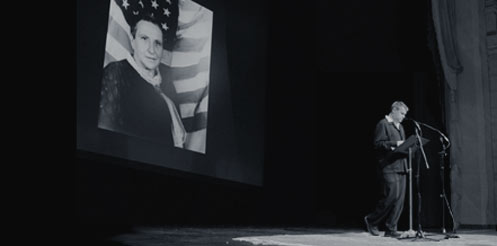
The evening consisted of nearly 20 readings, one right after the other, with an intermission halfway through – all in all, three hours. “Howl” tribute or not, you might expect a little shifting in the chairs, a little text messaging, maybe some early departures. But, no. Each reading was given its due respect and the pieces were so thoughtfully selected and moving that the audience seemed rewarded for its good behavior with one gem after another. As each reader spoke, photographs of the featured author were projected onto a screen behind them.
Some highlights:
New York writer Cintra Wilson, formerly of San Francisco, got things off to a saucy start, walking on stage in a figure-hugging, two-piece skirt and jacket ensemble. Hair up, retro cat eye glasses atop a well-powdered nose (think sexy librarian). Her enunciation was perfection as she delivered some amusing word definitions, taken from Ambrose Bierce's The Devil's Dictionary .
Armistead Maupin, who followed Cintra Wilson, began, “Sitting on the side, looking at Cintra Wilson's ass is enough to turn a gay boy straight.” This joke took on a life of its own as several readers throughout tweaked it to best describe the derriere of the reader that preceded them. The Tales of the City author proceeded to read a Mark Twain piece on the 1865 earthquake, “back when it was still known as The Big One.”
Jerry Brown, dressed in a dark suit and silver tie, read from Jack London's The People of the Abyss, a moving commentary on poverty and the conditions of paupers and children in ghettos. The Oakland Mayor finished, adding, “It's pretty heavy, but it's still going on.” Jack London was also an Oakland mayoral candidate.
Daniel Handler, creator of the Lemony Snicket series, read from Gertrude Stein. He told the audience that on her deathbed, Stein reportedly asked, “What was the question?” He also announced, as he first stepped up to the microphone, that “looking backstage at the ass of Jerry Brown, it's enough to turn a straight boy gay.”
Eddie Muller, nicknamed the “Czar of Noir,” read from Dashiell Hammett, doing a fine impersonation of The Fatman as he purred the famous opening line, “Ah, Mister Spade…”
And so on and so forth…like I said, each reader presented a gem.
Michael McClure, now 73, still lives and teaches in the Bay Area. Handsome in black jeans and blazer, his silver white hair tousled back, he came out and bowed to the audience. The youngest of the original poets from the Six Gallery reading, McClure read four of the same poems he read that evening in 1955, including “For the Death of a 100 Whales.” Intense and dramatic, hands gesturing, McClure read with focus and passion. Of that historic evening, he said, “We knew it instantly…that we had created a spark.” Of “Howl,” he said, “It was a poem about the nature of a new society in America.” And of the night's celebration, he joked, “There are more people here tonight.”
I was surprised and saddened that the entire audience did not give McClure a standing ovation. I mean, I know San Francisco audiences are subdued but, People, C'mon! It's one of the original six. It's 50 years later. He's reading the same damn poems. What's it gonna take?
Realizing that no one could read Ginsberg better than Ginsberg, the organizers arranged for the final reader to be the man himself (on video) reading from “Howl.” The footage was from 1992, for the documentary The Life and Times of Allen Ginsberg by Jerry Aronson. The filmmaker put together this short excerpt especially for the Howl Redux reading.
The Litquake evening may not have brought about revolution as it did 50 years ago, but it gracefully ushered in a week devoted to celebrating the city's current literary renaissance. Jack Boulware, Litquake's co-director, announced during the show that the mayor's office had declared October 7–15 Litquake Week. So now it's official. Litquake will, no doubt, continue to energize the city's literary scene, showcasing new works by contemporary writers, and providing a space for those who still remember how to, you know, howl.
Monday, April 28, 2008
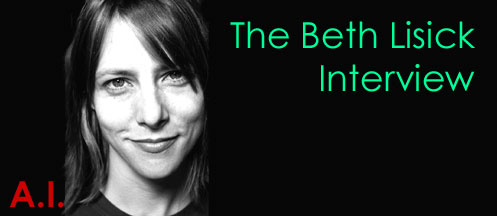
Beth Lisick - a Star on the Rise
Original author photo by Winni Wintermeyer
The main question that comes up when talking about Bay Area writer, performer, and rising literary star, Beth Lisick, is how does she do it all? This past July saw the release of her third book, Everybody into the Pool: True Tales (Regan Books), as well as the third anniversary of the popular Porch Light storytelling series, which she runs along with Arline Katte. She and her musician husband, Eli Crews, started back up their cabaret-style novelty band, The Loins, and not so long ago, she released a hilarious art film, “Diving for Pearls,” which she co-created and starred in with regular performance partner, Tara Jepsen.
Tired yet?
This is on top of already having published two other books (with Manic D Press), writing the Buzz Town column for SFGate.com for eight years, contributing to NPR's This American Life , and having her (now defunct) spoken-word/music band, The Beth Lisick Ordeal, featured at Lollapalooza in 1994. Among other ventures.
So how does she do it? After meeting with her at her writing office in Oakland and talking about all things writerly, I'm starting to know. It has something to do with following her muse, putting herself out there, and having a whole lot of fun along the way. Of course, it doesn't hurt that she's talented, wickedly funny, as Dave Eggers called her, and seems to have boundless energy. For more, you'll just have to read the interview.
I understand you got started performing and writing by reading at poetry open mics. How long ago was that? And how long did you do that before getting involved in other projects?
I think it was 1994, when I did Lollapalooza. Yeah, I would just go to open mics like the Chameleon Monday nights and Paradise Lounge Sunday nights, which were the two big readings in San Francisco for a long time. So basically, I was doing readings, and then featured readings. A lot of people were coming and Jen [Jennifer Joseph, who ran the poetry readings at Paradise Lounge and is the publisher of Manic D Press] just stepped up and said why don't we collect what you've been reading and put them in a book. So when I had written them, I had never intentionally thought they were ever going to be in a book. …I was just writing stuff – “Oh, here's about three minutes of reading.” So this first book is just a collection of performance monologues and poetry.
How long after doing readings did the book come out?
The book came out in 1997, so I was probably doing stuff for about two years.
How did that start you on the career path to where you are today, in general? You've done so many projects; how did one thing lead to another?
When the book came out, I went on a big tour in which I piled all my books in the back of my dad's pickup truck and drove around the country by myself to about 30 cities. There was a scene through the poetry slams – because I did that for a couple of years – and so I had met people in all these different cities. So, mostly I did featured readings at poetry fests around the country. I sold a ton of books out of the back my truck, about 500 books.
I had never believed in a career or anything. It's really only been with the publishing of this latest book that I thought I need to get serious about something. Or, how am I ever going to pay the bills, if I just keep doing all the things that sound fun? So I'm trying to figure that out right now.
But my first book tour did show me that, oh, I can be a writer. I didn't call myself a writer until just a few years ago, really.
Did you think of yourself as a performer?
No, I don't know what I thought of myself. I would say what I was doing by saying, oh, I write this column [Buzz Town for SFGate.com] because I was making some money doing that. But I was never one of those people that say oh, I have to write, people have to hear what I have to say. So that's why I didn't think of myself as a writer. I really thought you had to have something sensitive and important to say.
With the first book, Monkey Girl , I really thought, oh, all right, I can write stuff, and wouldn't that be great to write a book knowing from the beginning that it was going to be published. One of the pieces in Monkey Girl was published in The Best American Poetry , and that was my first published poem ever. I never even thought of that piece as a poem. That really showed me something, that the higher world is completely open, and there are no rules. You can do everything in your own way.
Did you choose projects by what inspired you in the moment?
Yeah, and I still have a hard time trying to focus. But yeah, I always just did what seemed interesting. I've always enjoyed the process of making stuff and working with other people and doing things, and not done much worrying about what happened after it was out there.
I just kept saying yes to everything. Will you do this reading? Will you do this performance? Do you want to work on this together? Opportunities just keep coming if you keep saying yes and putting yourself out there. I've never been concerned that my output has to be perfect. … On this last book, I worked on it harder than I've worked on anything in my life because I did want it to be really good, I really wanted to be happy with it. But before that, I thought, it's just fun to get stuff out there.
Yes, because that holds up a lot of people: perfectionism.
Yeah. I'm not just going to put stuff out there, which is why I never will have a blog. (I don't think there's anything wrong with blogs or bloggers; it's just something I would never do.) But at the same time, I'm not overly concerned.
What do you consider to be your first break as a writer?
Well, definitely The Best American Poetry thing.
When did that happen?
That was 1997. What happened was that Jennifer Joseph was pregnant and couldn't go to this writer's conference in Birmingham, Alabama, so she sent me and two other authors from Manic D. My book hadn't come out yet. So we went to this conference and there was a cocktail party with all these fancy poets and writers. We were the cocktail entertainment; it was me, Jeff McDaniel, and Bucky Sinister. People were eating appetizers and drinking cocktails and then it was, “Oh the kids are going to read their poetry.” I read one poem and James Tate, who is an incredibly well-established, famous poet and who was in the audience, said that was an incredible poem. I was like, oh, really, that's a poem? James Tate is telling me that something is a poem. He asked if it was published anywhere, and I said no. To get in The Best American Poetry anthology, the poem has to be published somewhere first, in literary journals. So he referred me to a guy who publishes the Clockwatch Review . [This person] said, why don't you send it to me and I'll publish it in Clockwatch . So I did that, and then James Tate pulled it from Clockwatch to put in the anthology.
You know, I've never once in my life submitted anything to a journal. The thing I liked to do was read stuff out loud. I thought, why try to get into these things that I don't even read? What would I be trying to prove by sending my poems to some journal I've never even bought, whose poets I don't know? Reading my poem out loud is how I got into this.
Had you always wanted to write or perform? I read that you were a “frustrated writer” and that's what motivated you to get up and perform.
I was and still am a very practical person. I didn't know any artists, I didn't know any writers. I didn't grow up with that, so I didn't really understand. I thought you had to have a huge, gigantic ego to be an artist. I thought, why would you do something and think that anybody even cares? Not in a bad way. But like, god, it takes a lot of balls to express yourself and think someone else cares.
When I was in college, I started writing down overheard conversations and things like that. It wasn't until a couple years after college that I was at an open mic having a beer and thought, oh, OK, so people can just get up for three minutes and say their thing, and they get off the stage and whatever. Some of it's good and some of it's bad. So I'll just go write something and bring it back, and I can read it.
That's when I found out some things, like I'm not afraid of public speaking. Supposedly that's a lot of people's morbid fear – and so I've got that going for me. I'm not afraid of looking stupid. I've gotten up and read things that weren't so great, but it's never bothered me. I never thought that somebody was going to not like me based on what I read.
Do you prefer performing or writing? Or do you see them as together?
When I started out, I was writing just to perform. The performance that I do now … is more about the performance and less about the writing. They were close. I would memorize everything. I would write a 40-minute set and completely memorize it. Now, I'm concentrating on my writing and just reading it, and the performance is separate.
How do you balance among all your obligations?
Now Gus [her son] is in pre-school. It's great, because now I can drop him off and come over here, and I don't pick him up until six o'clock. Before I would be up until three, four in the morning writing. Now it's great because I can be more on a schedule.
It's hard figuring out [where to focus]. The stuff I do with Tara [Jepsen, her collaborator on “Diving for Pearls”] is super fun and we have such a blast doing it, but we don't make any money off it. And right now it's really hard because I'm supposed to be writing a short story for an anthology. It was due last week, and it actually pays money. I'm trying hard to finish it, but at the same time I have the stuff with Tara, which I really want to do.
A lot of it [balancing] is really financially based. … I need to actually improve my quality of life.
Do you set goals for yourself? How do you motivate yourself for your projects?
Most of [my decisions were] based on if a project looked interesting and fun to me. I never really thought, I'm going to make a movie today. But then Tara and I start talking about it. Well, yeah, let's do it!
And then, yeah, I do set goals. I don't have any master list or agenda or anything like that. When I was doing a reading two years ago, there was an agent in the audience from this New York agency. She approached me afterwards and said, I would really like to represent you. That was definitely a time in my life when I said, OK, I need to take this really seriously, I need to write a really good book, I need to come up with a good idea. I said, here's a chance where I can work really hard and try to make this happen.
How would you describe your work process?
Hhm. I don't know.
Do you just do whatever is needed to be done in the moment?
Yeah. I'm really deadline-oriented. I like having a deadline a lot. It really helps me. I just sit there and try to write. I don't know what my process is.
Do you sit down at your desk at the same time every day?
Yeah, pretty much during the day.
What inspires you to keep writing?
Other writers definitely inspire me, writers that I know. Seeing Michelle [Tea], and reading Michelle's work, and Mary [Roach] and Lisa [Margonelli] and Joe [Loya]. And Porch Light, hearing people's stories. That's really helped me in my own writing, hearing all the different ways that a story can be told, and seeing what's interesting to me and what works. So yeah, other artists and writers inspire me.
What have been your biggest challenges in your career and/or writing process?
Having a kid was hard, a challenge. It really was. I tried to pretend that it wasn't for a while. A certain part of my personality was like, oh, everybody makes such a big deal about it. Everybody has kids. What's the big deal? And then it was, oh, it is a big deal. It takes up a lot of time and energy, it's hard work, and so that was definitely a challenge.
Another big challenge is just that insecurity of, “is this even good?” Trying to get past those little voices that creep up and say, why are you even doing this? Why would anybody even care? Is this an acceptable way to write a story, because it's weird or whatever? So that's always a challenge.
How have you made ends meet as a writer? I know you've said you've never really had a regular day job.
I have not had a day job in five years. I was working at SFGate as an editor doing pages (pulling stories together from the Chronicle), and I was writing a column at the same time. And then I left and just was writing my column. It wasn't a lot of money, but I was paid weekly for the column. Besides that I would do a lot of things. It's really funny but when I start talking about it I can't remember how it happened.
I'm looking at my calendar to see what I have. This Saturday, I'm going to spend all day at a celebrity chef cooking event that I'm managing. … I have a lot in October. The Headlands Center for the Arts has a mystery ball, and I'm going to do the art auction at that. I get asked to do a lot of benefits. In November, Marin Country Day School is having a big book fair, and they're paying me to give a talk and a reading.
It really is week to week. I wrote something for the back of the Chronicle magazine a couple of weeks ago, and this anthology that I'm doing a story for now pays some money. I've done some magazine writing. I'm starting to get a little work that way. But a lot of it is a combination of freelance writing and art auctioneering.
What advice would you give a writer who wants to follow in your footsteps, either as writer or performer or combination thereof?
For me it's been really important to not stress out about making sure that everything is perfect. I think it's really important to just keep writing and performing and putting things out there, because you learn every time you do it. You shouldn't be paralyzed by the thought that what you're doing isn't absolutely perfect.
Maybe people think, oh, she puts out all this mediocre stuff in all these different genres. But for me, I'm learning something every time I do that. There's mediocre music and there are mediocre TV shows and there are things that have redeeming qualities. I was reading something someone wrote about me that said, just because you're good with a mic and Ira Glass let you go on American Life doesn't mean you can write a book. And I'm like, really, why not? So to write a book it all of a sudden has to be this… That's the thing about Porch Light and stories, it shows that everybody has stories to tell. So yeah, maybe a few people aren't going to want to hear your story, and maybe they are.
What does the future hold for you?
I have two different book proposals right now. So I'm definitely going to write more books.
And you have a screenplay out, right?
Tara and I wrote a screenplay, and yeah, it almost got made. We have one of those stories. So that's out there. My literary agent got me a TV and film writing agent, and so I have a couple TV show ideas.
So the two book proposals you have out, are they creative nonfiction or…?
One of them is creative nonfiction; it's an idea I have that I'm really excited about. There are people all over that teach workshops and classes out of their homes, so what I'm going to do is go around the country and take classes at people's houses and write about them. Like there's this lady in Fort Wayne, Indiana who teaches witchcraft out of her apartment, and there's this lady in Las Vegas who has a stripper pole in her living room. There's also mundane stuff, like scrap booking and weird cooking classes and money management classes. I just love the idea that you would maybe or maybe not be an expert at something, and would put up an ad, invite strangers into your house, and teach them how to do something. It's kind of about making friends and making money, and it's so weird to me. I'm really excited about doing that.
The other one is something I never thought I'd do. A couple of young adult editors asked me if I wanted to try a young adult novel. … And so I got this idea. I thought, what kind of book would I have liked to have read? So I'm going to write a young adult novel.
Sunday, April 20, 2008
Porch Light Storytelling Series
With a theme of “Utilities Included: The Roommate Show,” I expected to hear a lot of roommate bashing on Monday night at the monthly Porch Light storytelling series held at the Swedish American Hall (upstairs to Café du Nord). But it wasn't like that at all. Sure, there were a couple of crazy, abusive roommates in the tellings, but mostly what showed up on the stage was a lively, diverse mix of stories, from prison roommates to traveling-across-the-country-in-a-van roommates to finding the perfect roommate only to have it end sadly.
That's what local literary divas Beth Lisick and Arline Klatte , founders and hosts of this monthly event, are so good at: putting together an eclectic mix of storytellers for an evening of fresh entertainment. Here's what I mean by eclectic: Monday night's line-up included a book store manager/author, a bus-driver, an ex-bank robber/writer, an assistant sommelier, a comedian, and an oral historian. Each had ten minutes to tell a tale without notes or memorization, and damn if every one of them wasn't so natural behind the mic that you felt as if they were at a casual cocktail party, just telling you their wild story.
Porch Light recently celebrated its third anniversary (in July) and was filmed by KRON TV last month, which may have explained why the house was packed – as opposed to just full. A rough count put my estimate around 170, but it could have been more. I even spotted travel writer Jeff Greenwald in the audience, possibly scoping the event for next month when he'll be telling a tale of his own for Porch Light.
The evening began as it usually does, with soothing ballads from the musical guest of the month. Twenty-four-year-old singer/songwriter Ryan Auffenberg from St. Louis, Missouri provided that for us, lending us his beautiful voice and soulful lyrics, playing on both piano and guitar.
Beth and Arline then hit the stage and introduced Marc Capelle , Porch Light's piano man (if he's playing while you're telling a story, it means you better wrap it up). After a short introduction, the readings began.
Here's a roundup:
Bookstore manager/author Alvin Orloff started us off with a story (in fast-paced delivery) about his now ex-roommate of 16 years, Tyler, the trust-fund artist/circuit queen wannabe who complained about everything, forcing Alvin to develop a permanent Pollyanna voice inside his head to counter.
Comedian Kevin Avery ragged on his recent ex-roommate. His anger still fresh, he enthusiastically recounted her various shortcomings and admitted to us, “Ah, this feels really good.”
Freddie Brooks , the sommelier, told the most moving story of the evening. In careful detail, he recounted his search for and finding of the perfect roommate, someone who satisfied all his fussy requirements, only to have that roommate mysteriously and sadly pass away. His delivery, filled with emotional pauses, was powerful.
Then came intermission, time to buy drinks at the bar in the back and, if you're brave, put your name in the hat so you can tell your own story on stage after the break.
The name drawn was Greg Gaston , who told his three-minute story of getting mugged and then going back home to find his muggers using his money to buy drugs from his roommates. A good one!
Oral historian Lani Silver used the roommate theme only as a hook into a whole other story, one in which she humorously described her startling transformation from a bridge-playing, bridesmaid dress-picking, Vietnam-war supporting Republican into a radical activist after witnessing the conditions in apartheid-era townships in South Africa.
Bus driver and Porch Light regular, Kelly Beardsley , who comes off to me as the most natural storyteller of the bunch, told an animated tale about getting stopped by cops in Alabama while driving cross country in a van with her roommate. “We bought some American flag stickers so we'd blend in.”
Joe Loya , writer and, oh yes, ex-bank robber, talked about a very violent prison cell roommate who also happened to be “really sentimental and sweet,” posting a picture of multi-cultural babies on the wall (his “little peoples”) and building a shrine to the Virgin Mary out of candy only to have that turn into a vibrating mound of ants.
All in all, a fabulous, lively night.
Out at the RADAR Reading
I've been meaning to get over to the Main San Francisco Public Library for one of Michelle Tea's monthly RADAR readings for some time now, and finally I made it. Billed as “a showcase of underground and emerging literature and art,” I had to admit, I didn't know what to expect, if there would be ten people or 80, if the readings would be lively or somber.
As it turned out, there were over 100 people. More chairs had to be retrieved, and still, people sat on the floor and stood in the back, all eager to hear that evening's line-up of fantastic readers: Jessica Arndt, Stanya Kahn, Beth Lisick, and Harry Dodge. Google any of these folks, and you'll see what all the fuss was about.
Even so, I was assured by regulars that seats usually fill for this event, which puts average attendance around 60 (if I count the chairs). Impressive.
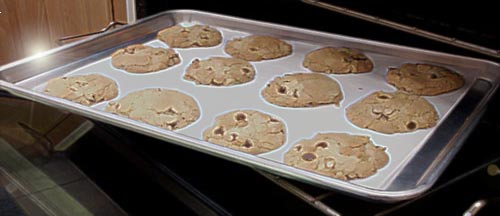
So what's the draw? Is it the diverse cast of readers Ms. Tea manages to line-up, the charismatic and energetic presence of the famed Ms. Tea herself, or the home-baked cookies she brings to these readings? Well, I think it's all of that.
The Readings
Jim Van Buskirk, the Program Manager of the Gay/Lesbian Center for the Public Library, introduced Michelle Tea , creator and host of the event, among loud “woo-woo's” and boisterous clapping. Tea wasted no time getting right to the readings, but not without first apologizing for the raisins in the oatmeal raisin cookies, in case anyone didn't like them.
First up was Jessica (“Jess”) Arndt , who has published in the anthology, Bottoms Up , among other publications. Jess read a sailor story that infused her own telling right into the famous text of Moby Dick, blending elements of past and present (such as, well, circuit parties, for one). The result was a telling rich in atmosphere and detail.
Next up was Stanya Kahn , an established performer, dancer, and writer, who drove up from Los Angeles for the reading (with fellow reader, Harry Dodge). She also brought her cute, amazingly quiet nine and a half month old baby.
Kahn read “Hell,” which described in rich, colorful, and rapidly-paced detail, her version of hell on earth. She covered a lot of territory – from Bush the Devil to reality TV, keeping us laughing all the way through. One sequence involved working at Macy's and having to help the models dress, models with “veins like Vietnamese spring roles.” Her 12 or so years as a performance artist came through as she mocked the voices and accents of the models.
Up next: Beth Lisick , who has published three books, most recently the hilarious account of her growing up, Everybody into the Pool. She also runs the monthly Porch Light Storytelling series, and has recently released a film, “Diving for Pearls.”
After telling us an amusing anecdote about her brother (and wanting to play his message for us from her cell phone), she moved on to reading from her latest book. As always, in front of an audience, she was energetic and full of expression. Her reading was filled with over-the-top descriptions about her high school years. Expressing the need to be more focused by doing something in which she “had shown some aptitude,” for example, she takes on Extreme Tanning, telling us about the marathon television watching she had to give to do it. Hilarious, all.
Last, but certainly not least was Harry Dodge , writer, director, and performer. She co-wrote and directed the film, “By Hook or By Crook,” and created the award-winning coffeehouse/cabaret, The Bearded Lady right here in San Francisco.
Although she claimed to be panicked for not being in front of a mic for a while, there were no signs of it in this seasoned performer. She read an imaginative and humorous tale that was peppered with funny characters named mostly after musicians or bands, such as Air Supply, Neal Sedaka, Chuck Mangione, and Barbara Streisand. I got this quote down: “I was strapped to a potty seat for 2 years… until workers found me…”, which may give you a glimpse of the story's flavor.
The Q&A
After an hour of readings, the writers were asked to take seats behind mics at the front of the room for the Q&A session that makes up the second hour. That was when I understood about the cookies. It seems when you ask a question, Michelle brings you a cookie. What a treat!
In all, a lively event. Check it out next month.